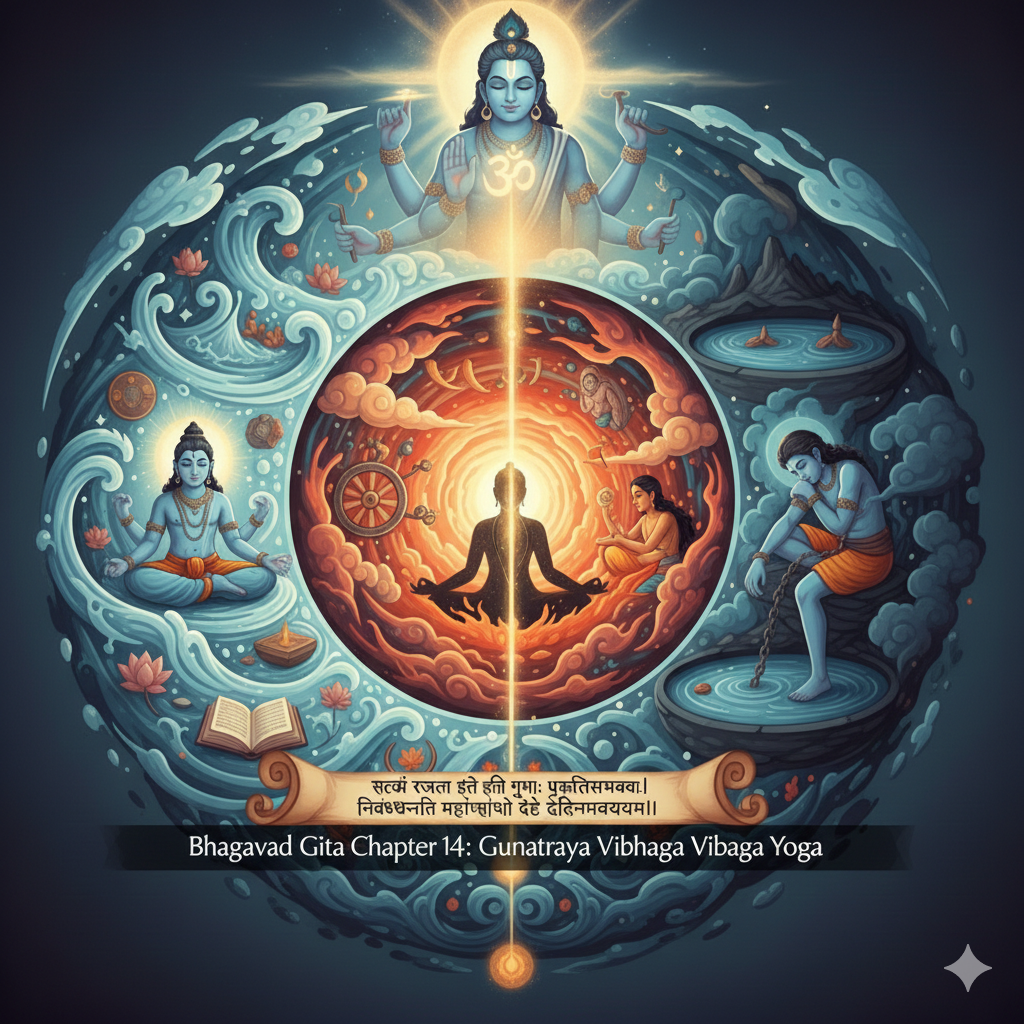
(The Yoga of the Division of the Three Gunas)
Introduction
In Chapter 14 of the Bhagavad Gita, Lord Krishna explains the invisible forces that shape human behavior, thoughts, emotions, and destiny — the three gunas of material nature.
These gunas silently influence:
- Our mindset
- Our actions
- Our spiritual progress
- Our bondage and liberation
Understanding them is essential for self-mastery, healing, and spiritual evolution.
Central Theme of Chapter 14
Lord Krishna reveals:
- The nature of Sattva, Rajas, and Tamas
- How these qualities bind the soul
- Their effects on knowledge, action, and consciousness
- The way to rise beyond all three
Freedom comes not by fighting the gunas, but by witnessing and transcending them.
The Three Gunas Explained
1. Sattva – The Mode of Goodness
Characteristics:
- Purity and clarity
- Wisdom and knowledge
- Peace, contentment, and compassion
Effect:
- Leads to happiness and spiritual growth
- Still binds through attachment to joy and knowledge
2. Rajas – The Mode of Passion
Characteristics:
- Desire and ambition
- Restlessness and attachment to results
- Constant activity
Effect:
- Binds the soul through action and craving
- Causes stress, anxiety, and dissatisfaction
3. Tamas – The Mode of Ignorance
Characteristics:
- Darkness and inertia
- Laziness and confusion
- Negligence and delusion
Effect:
- Leads to ignorance and suffering
- Causes downfall when dominant
How the Gunas Bind the Soul
When the soul identifies with the body and mind, the gunas take control.
- Sattva binds through pleasure
- Rajas binds through action
- Tamas binds through ignorance
The soul becomes trapped in repeated birth and death due to this identification.
Signs of Each Guna in Daily Life
- Sattva dominant: Calm, disciplined, reflective
- Rajas dominant: Overthinking, desire-driven, restless
- Tamas dominant: Procrastination, dullness, confusion
Recognizing these patterns is the first step toward inner healing.
How to Transcend the Three Gunas
Lord Krishna teaches that one rises above the gunas by:
- Remaining steady in pleasure and pain
- Being free from ego and attachment
- Treating praise and criticism equally
- Maintaining devotion to the Divine
A gunatita (beyond gunas) soul lives in awareness, not reaction.
Role of Bhakti in Transcending Gunas
Pure devotion dissolves the influence of the gunas naturally.
When actions are offered to the Divine:
- Ego weakens
- Attachment fades
- Inner peace becomes stable
Bhakti becomes the highest purifier.
Practical Relevance in Modern Life
Chapter 14 helps in:
- Understanding mood swings and emotions
- Healing anxiety, lethargy, and restlessness
- Developing mental discipline
- Choosing sattvic habits and lifestyle
- Progressing spiritually without repression
This knowledge is deeply supportive for mind training, Reiki practices, and conscious living.
Takeaway Shloka (Correct Sanskrit)
Bhagavad Gita 14.5
सत्त्वं रजस्तम इति गुणाः प्रकृतिसम्भवाः।
निबध्नन्ति महाबाहो देहे देहिनमव्ययम्॥
Meaning:
Sattva, Rajas, and Tamas — these qualities born of material nature bind the imperishable soul to the body.
Key Learnings from Chapter 14
- The gunas influence all behavior
- Awareness breaks unconscious patterns
- Devotion leads beyond material qualities
- True freedom lies beyond pleasure and pain
Conclusion
Chapter 14 of the Bhagavad Gita brings powerful clarity about human nature. By understanding the gunas, the seeker stops blaming life and starts mastering consciousness.
Rising beyond the gunas is the doorway to inner peace, healing, and liberation.
Leave a Reply